Few day trips in Italy pack the kind of punch that this one does. In a single day, you step inside a Roman city that was alive two thousand years ago, then climb the very volcano responsible for burying it. Pompeii and Mount Vesuvius together offer something rare in travel: the feeling that history isn't something you're observing from distance, but something you're standing inside. If you're based in Naples and wondering how to make the most of a day away from the city, this is the answer.
Pompeii & Mount Vesuvius Day Trip From Naples: Tickets, Tours & Travel Tips
Published on

Planning this trip well makes all the differences. Between tickets, transport, opening hours, and knowing what to prioritize once you're on the ground, there's a lot to get right. This guide covers everything, so you can focus on experiencing it rather than figuring it out on the fly.
The Story of Pompeii: A City Frozen in Time
On the morning of August 24th, 79 AD, the residents of Pompeii woke up to what seemed like an ordinary late-summer day. By the following morning, the city was gone, buried under nearly twenty feet of volcanic ash that would preserve it, almost prefectly, for more than seventeen centuries.
What makes Pompeii unique among all archaeological sites in the world is not its scale, but is intimacy. When excavations began in the eighteenth century, archaeologists found bakeries with bread still in the ovens, frescoes with barely-faded colors, and graffiti scratched into plaster walls. Electoral slogans. Shopping lists. The small details of daily life, paused mid-sentence. The history of the Pompeii eruption and its aftermath is one of the ancient world's most dramatic stories, and the site itself is the most vivid way to encounter it.
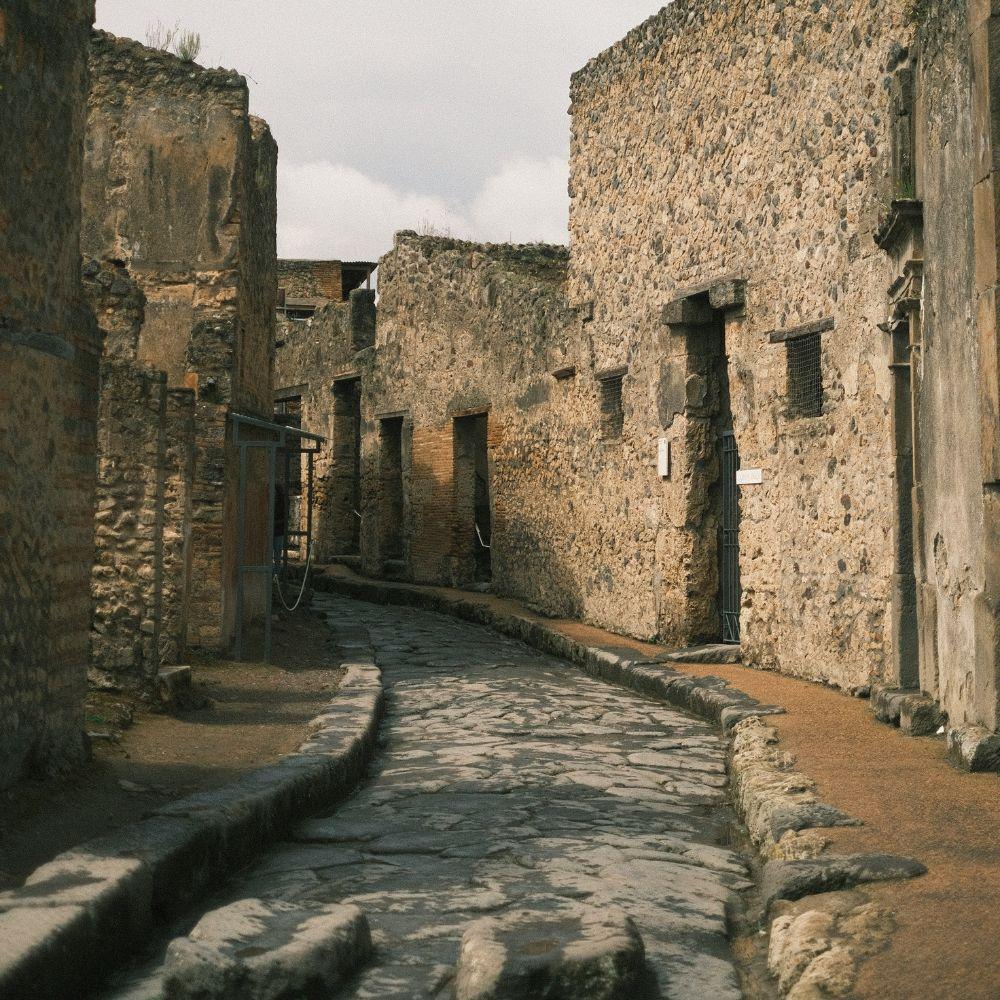
What to See in Pompeii: Highlights of the Archaeological Site
The site covers roughly 44 hectares, and seeing everything in a single visit is simply not possible. Knowing what to prioritize makes the difference between a focused, meaningful morning and an overwhelming wander.
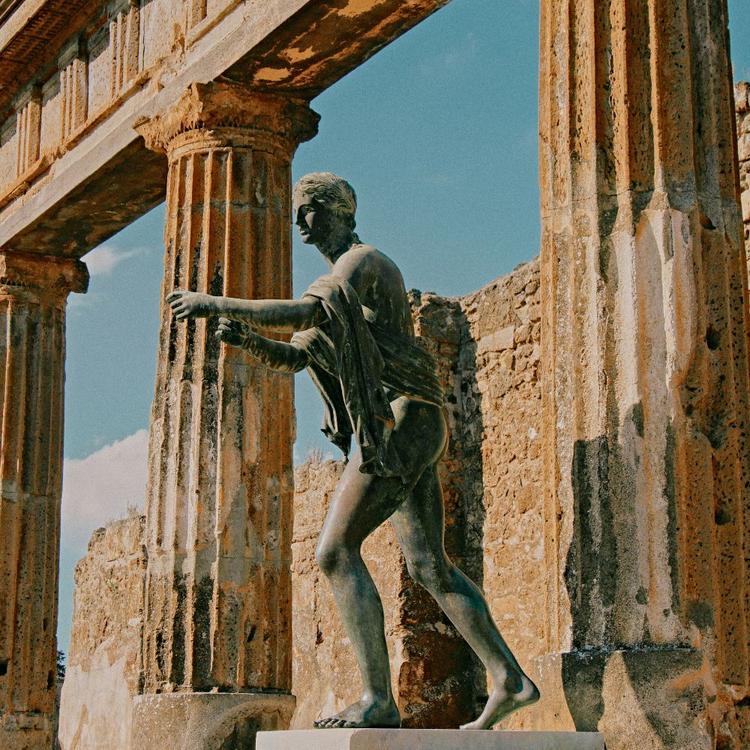
The Forum was the political, commercial, and religious center of the city. Standing here, looking toward the Arch of Tiberius with Vesuvius rising in the background, gives you an immediate sense of scale: both of the city and of what happened to it.
The Amphitheater, built around 70 BC, is one of the oldest surviving Roman amphitheatre in existence. Located at the eastern end of the site, it's quieter than the central areas and often missed by visitors who run out of time. Plan your route to include it.
The Villa of the Mysteries, just outside the city walls, contains one of the most remarkable fresco cycles from the ancient world: a continuous narrative scene, throught to depict Dionysian initiation rites, painted colors that have barely dimmed in two thousand years.
The Plaster Casts are among the most haunting things you'll encounter anywhere. The voids left in the ash by the victims of the eruption were filled with plaster in the nineteenth century, producing precise casts of people and animals frozen in their final moments. They are displayed at several points throughout the site, and they deserve more than a passing glance.
Given the size of the site, visiting without guidance makes it easy to lose context quickly. A knowledgeable guide transforms the same physical space into something far more meaningful, which is one of the strongest arguments for joining an organized tour rather than going it alone.
Mount Vesuvius: Climbing the Volcano That Changed History
After Pompeii, the logical next move is Vesuvius itself. The volcano that destroyed the city still dominates the skyline of the Bay of Naples from nearly every angle. From the ruins, you've seen what it left behind. Climbing it is a different kind of reckoning.
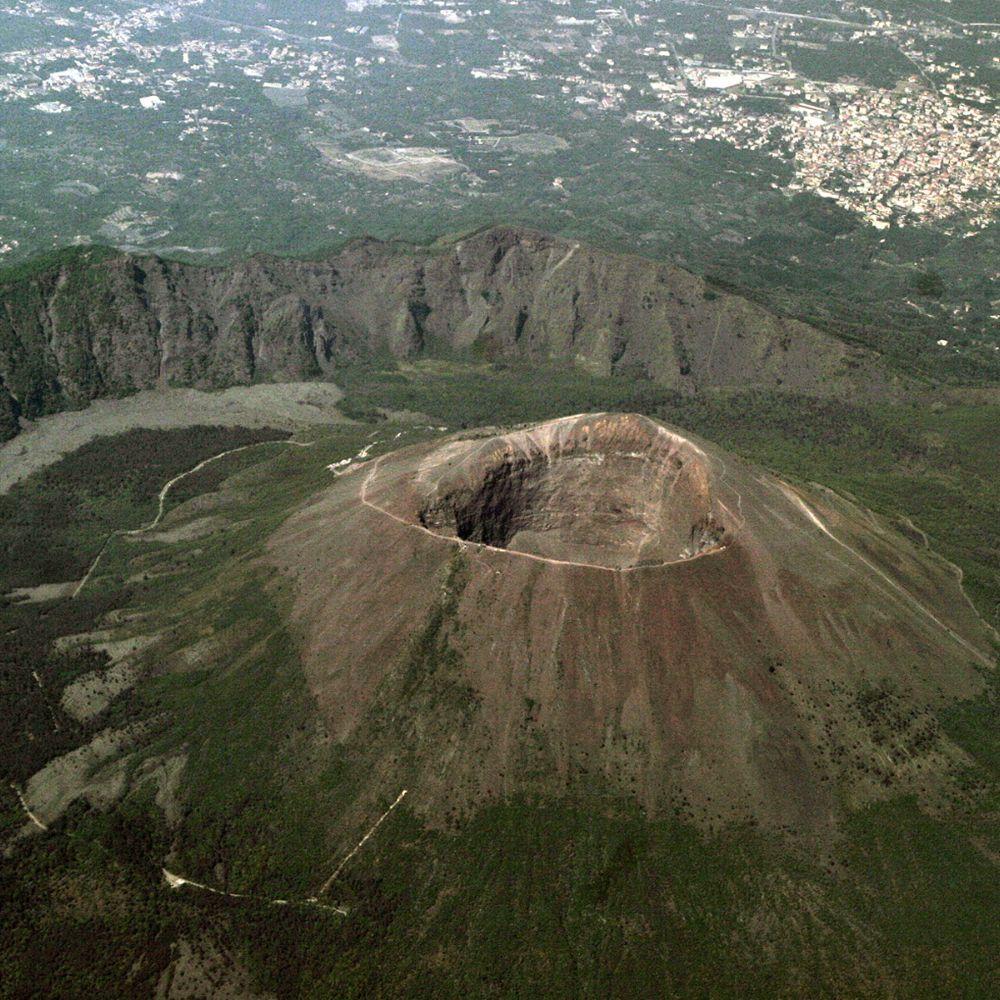
Vesuvius is the only active volcano on the European mainland (the Mount Etna is in Sicily, which is an island) last erupting in 1944 and continuosly monitored. Visiting today is entirely safe, and the views from the crater's edge are among the finest in southern Italy.
The Mount Vesuvius hike is moderately demanding but manageable for most people with a reasonable level of fitness. Organized tours drop you at around 1,000 meters above sea level, from where a 30-minute walk along a steep gravel path brings you to the crater rim at approximately 1,281 meters. The terrain is loose and the exposure can be significant, so proper fottwear matters. The temperature at the top is noticeably cooler than at the coast, and wind can pick up quickly.
Standing at the crater's edge and looking down into the volcanic cone has a quality that's difficult to prepare for. The landscape is stark, almost lunar, and the views over Naples and the Bay are completely open. On a clear day, Capri is visible on the horizon. It earns its approach.
How to Plan a Pompeii and Vesuvius Day Trip from Naples
Combining both sites in a single day is entirely doable, provided you start early and manage your time at Pompeii with some intention.
By train: the Circumvesuviana commuter line runs from the lower level of Napli Centrale to Pompei Scavi - Villa dei Misteri, directly in front of the main entrance, in roughly 35 to 40 minutes. Trains run approximately every 30 minutes. To reach Vesuvius from Pompeii, the EAV bus departs from near the Piazza Anfiteatro entrance and connects to the upper parking area on the volcano's slopes. In peak season, the Circumvesuviana can be crowded and occasionally delayed: build in some buffer time.
By guided tour (recommended): For most visitors, an organized tour is the more efficient option. The logistics of combining both sites independently, between train schedules, bus connections, and ticket queues, can quietely eat into your day. A guided departure from central Naples typically inside the archaeological park, and tranfer to Vesuvius. Everything is coordinated so your time is spent on the experience, not on figuring out the next connection.
Tickets, Guided Tours, And Skip-the-Line Options
Pompeii has a daily visitor cap, and tickets genuinely sell out duringpeak season between April and October. Booking your Pompeii skip-the-line tickets in advance is not a precaution: it's a necessity.
The standard Pompeii entry ticket costs €18 for adults. The site is open from 9 AM to 7 PM (April to October, last entry at 5:30 PM) and 9 AM to 5 PM (November to March, last entry at 3:30 PM). Mount Vesuvius entry costs €11.68, and can be purchased at the parking area or booked in advance.
Guided tours that combine both sites generally include transportation, skip-the-line access to Pompeii, a licensed local guide inside the park. Vesuvius entry, and transfer between sites. Some also include lunch. If you're wondering whether you need a guide for Pompeii, the short answer is no: but you will get significantly more out of it with one. The sire is large and layered enough that independent visitors often leave feeling they missed the point.
At Walks Inside Rome, we offer a full-day Pompeii and Mount Vesuvius experience with expert local guides, round-trip transport, lunch, and wine tasting. Everything is organized so the day is focused entirely on what matters.
8:00 hours
Private
Price on request
View morePractical Travel Tips for Visiting Pompeii and Vesuvius
A few things that separate a great day from an exhausting one:
- Footwear: Pompeii's basalt streets are uneven, and the Vesuvius trail is loose gravel on a steep incline. Sturdy, closed-toe shoes with good grip are essential.
- Sun and heat: Pompeii in summer is genuinely hot, with almost no shade an basalt paving that radiates warmth. Hat, sunscreen, and more water than you think you'll need are non-negotiable.
- Arrive early: The site opens at 9 AM. The early hours are cooler, quieter, and the morning light on the ruins is worth the effort of getting there at opening time.
- Bag size: Bags larger than 30x30x15 are not permitted inside either site. Free luggage storage is available at the main entrances.
- Vesuvius wind: Bring a light layer regardless of the temperature in Napels. The crater rim is exposed, and conditions can change quickly.
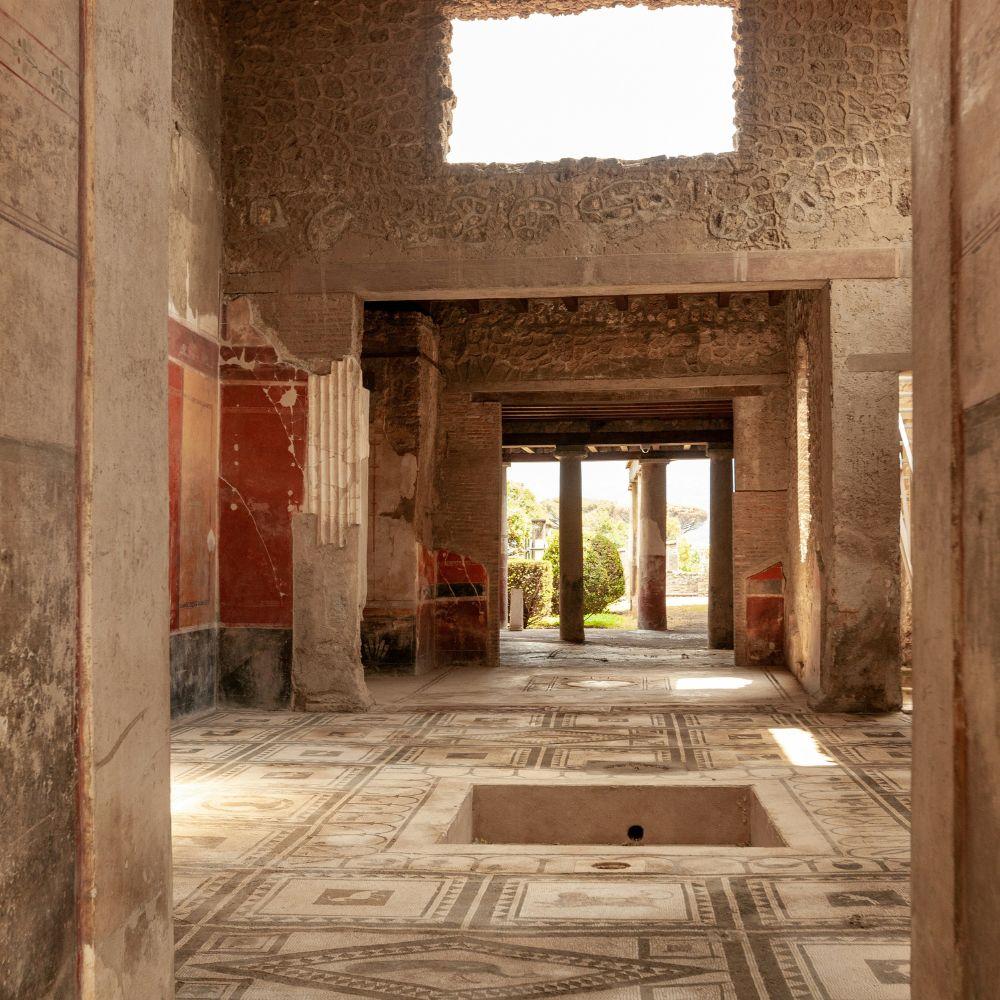
Why Having an Expert Guide Makes all the Difference
There is a version of this day trip that goes like this: you get on a train, queue at the entrance, wander through a large site with a map, see some ruins climb a volcano, and return to Naples. That version is fine.
Then there's the version where the Forum becomes a place of real political drama, where the plaster casts become people with names and stories, and where Vesuvius makes complete sense as the force that produced everything you saw that morning. Context is what converts a visit into an experience, and this is what a great guide actually does.
At Walks Inside Rome, our guides bring this history to life with a depth that goes beyond dates and descriptions. If you want to see Pompeii and Vesuvius, the train will get you there. If you want to truly understand them, we're here for that.

Written by
Marilena Barberi
Marilena Barberi is the Co-Founder and CEO of Walks Inside Rome & Italy, a family-run tour company founded in 1999. Born and raised in Rome, she has spent more than 25 years helping travelers discover the Eternal City through authentic, engaging, and carefully curated experiences. Her deep knowledge of Rome, it history, culture, neighborhoods, and traditions shapes the philosophy behind Walks Inside Rome & Italy: offering visitors a more personal way to experience the city, guided by local expertise and a genuine passion for Italian hospitality.
Back to top


