The Tiber River is one of Rome’s most iconic natural landmarks, quietly flowing through the city while carrying more than two thousand years of history along its banks. For travelers visiting Rome in 2026, the river remains a powerful presence, both as the birthplace of the Eternal City and as a scenic route connecting some of its most fascinating neighborhoods.
Discover the Tiber River: Myths, History, and Best Things to See
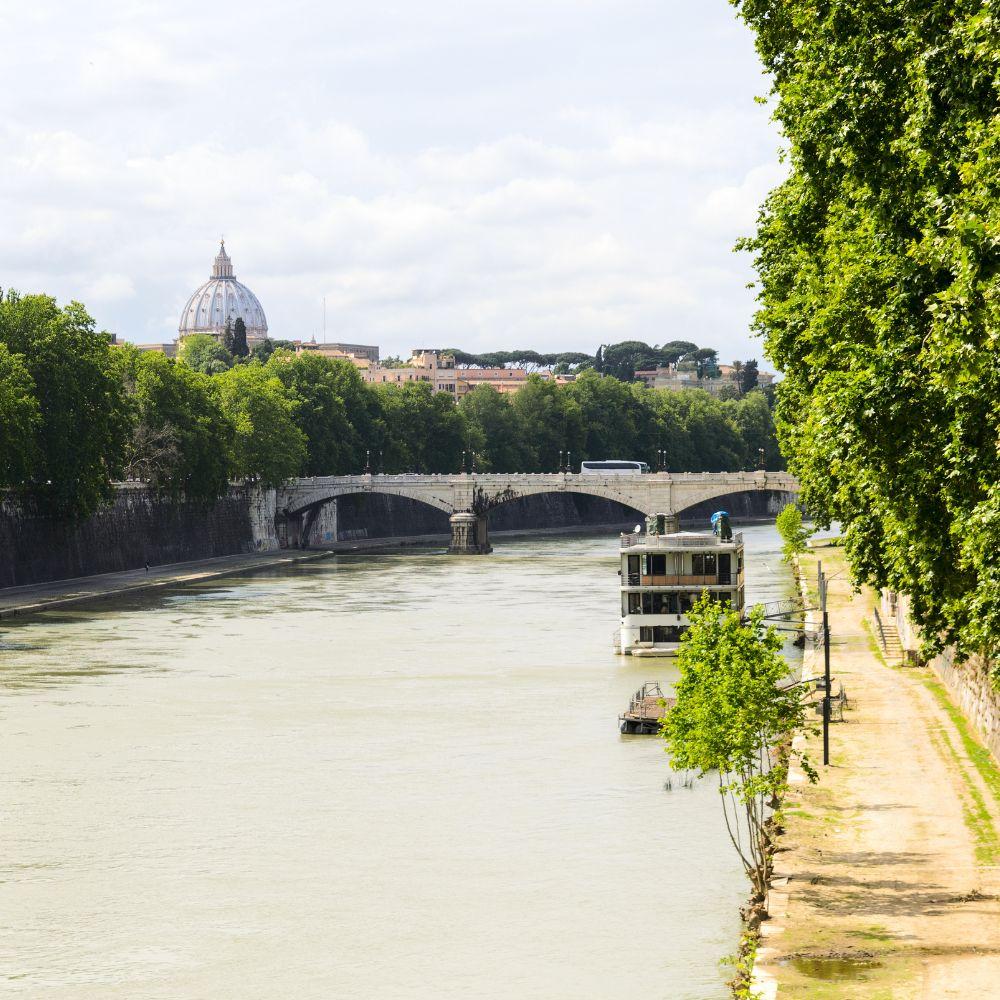
From ancient myths and imperial trade routes to peaceful evening walks and river cruises, the Tiber has shaped Rome’s identity in ways that are still visible today. Exploring it offers visitors a deeper understanding of how the city grew, evolved, and continues to live around its waters.
Pronunciation and Basic Facts
Before diving into legends and landmarks, it helps to get familiar with the basics of the Tiber River. Understanding its name, origins, and key characteristics makes it easier to appreciate its role in Roman history and modern travel experiences.
How to Pronounce “Tiber River”
In English, Tiber River is pronounced TIE-ber. Italians, however, call it Tevere, pronounced TEH-veh-reh. You may hear both names during your stay in Rome, especially on guided tours or when reading local signage. Knowing that Tiber River in Italian is Tevere helps travelers feel more confident navigating the city.
Essential Tiber River Facts
The Tiber River stretches for about 252 miles (405,5 km) making it the third-longest river in Italy. It originates in the Apennine Mountains of central Italy and flows south toward the Tyrrhenian Sea. In Rome, the river reaches a maximum depth of around 20 feet, depending on the season. Historically unpredictable and prone to flooding, the Tiber has been controlled by embankments since the late 19th century, giving it the calm appearance visitors see today.
Location and Geography
The Tiber’s location is central to understanding Rome itself. Its path explains why certain neighborhoods developed where they did and why the city became such a strategic power in the ancient world.
The river rises in the Apennines and ends near the ancient port city of Ostia, where it meets the sea. As it cuts through Rome, it curves gently past historic districts and crosses beneath famous bridges like Ponte Sant’Angelo and Ponte Sisto. Neighborhoods such as Trastevere, the Vatican area, and the historic center all developed along its banks.
When travelers search for a Tiber River map, they quickly see how closely the river is woven into Rome’s urban fabric. The Tiber is famous not only for its length but for its role as a natural boundary, trade route, and symbolic heart of the city.
Want a overlook on Tiber River? Join our Trastevere tour and discover all the secret and the hidden gems of this neighborhood!
Historical Importance
To understand Rome, one must understand the Tiber. Long before marble temples and imperial forums, the river provided the foundation for settlement, survival, and expansion.
Why the Tiber River Was Crucial to Ancient Rome?
The Tiber River was essential to ancient Rome because it supported trade, transportation, and defense. Merchant boats carried goods such as grain, wine, and olive oil directly into the city, while the river’s curves offered natural protection from invaders. Its shallow crossing points allowed early communities to control movement and commerce, fueling Rome’s growth from a village into an empire. This explains clearly why the Tiber River was important to ancient Rome.
Associated Gods and Myths
In ancient Roman religion, rivers were sacred. The Tiber was personified as the god Tiberinus, believed to protect the city and its people. According to legend, Tiberinus saved important figures from drowning and guided fate itself along the river’s currents. These stories answer the question of what gods were associated with the Tiber River in ancient Rome and form the basis of what is known as the myth of the Tiber River.
The Tiber in the Legend of Rome’s Founding
No myth is more famous than the story of Romulus and Remus. Cast into the Tiber as infants, the twins were saved when the river gently carried them to safety near the Palatine Hill. This legend gave the Tiber a symbolic role as the lifeline of Rome, a protector of its destiny and identity.
The Tiber River Today
Modern visitors encounter a very different river, shaped by engineering but still deeply connected to daily Roman life. The high embankments built in the 1800s prevent flooding and create long walkways ideal for exploring the city on foot.
The Tiber flows past areas such as Trastevere and the Vatican, offering unique perspectives of landmarks like Castel Sant’Angelo. Romans use the riverbanks for jogging, evening strolls, and seasonal festivals, while visitors enjoy the quieter atmosphere away from crowded streets.
Is It Possible to Swim in the Tiber?
Despite its calm appearance, swimming in the Tiber River is not allowed. Strong currents, boat traffic, and water quality concerns make it unsafe. Regulations are in place to protect both locals and tourists, so it is best enjoyed from the riverbanks or on a guided cruise.
What Are the Two Rivers of Rome?
Rome is defined by two rivers, the Tiber and the Aniene. The Aniene is a smaller tributary that joins the Tiber in northern Rome. While less famous, it played an important role in supplying water to ancient aqueducts and supporting early settlements.
Walking along the Tiber offers a different rhythm from Rome’s busy piazzas. Tree-lined paths, stone bridges, and reflections on the water create memorable photo opportunities, especially at sunset. Seasonal events, open-air bars, and summer festivals often animate the riverbanks, making them lively yet relaxed spaces for travelers.
Tiber River Cruise
A Tiber River cruise provides a fresh way to see Rome from the water. Cruises typically run during the warmer months and last about an hour, passing beneath historic bridges and offering views of riverside landmarks. Late afternoon and early evening are the best times, when the light softens and the city feels more peaceful. Access points are conveniently located near central attractions, making it easy to include a cruise in a day of sightseeing.
Planning Your Visit
The best viewpoints along the Tiber include bridges like Ponte Sant’Angelo and quieter stretches near Trastevere. Early morning and evening are ideal times to visit, with fewer crowds and cooler temperatures. Pairing a walk along the river with visits to nearby sites such as the Vatican or historic neighborhoods creates a balanced itinerary. Knowing simple Tiber River facts helps travelers plan efficiently and appreciate what they are seeing.
Explore Rome with Walks Inside Rome
For travelers who want to go beyond surface-level sightseeing, Walks Inside Rome offers expert-led tours that bring the city’s history, archaeology, and local culture to life. Our guides help visitors understand iconic landmarks connected to the Tiber River and beyond, weaving together stories that make Rome unforgettable.
Explore the Eternal City with knowledgeable locals! This allows you to see Rome not just as a destination, but as a living story shaped by centuries of history, flowing steadily forward, much like the Tiber itself.
Back to top


