If you grew up in the United States, chances are your school books introduced Ancient Rome through a familiar cast of characters and monuments: gladiators, emperors, Julius Caesar, the Colosseum. That version is not wrong, but it is incomplete. The real Rome was more layered, more contradictory, and in some ways ,pre recognizable than most classrom summaries suggest.
What School Books Never Explain About Ancient Rome: 10 Ancient Rome Facts
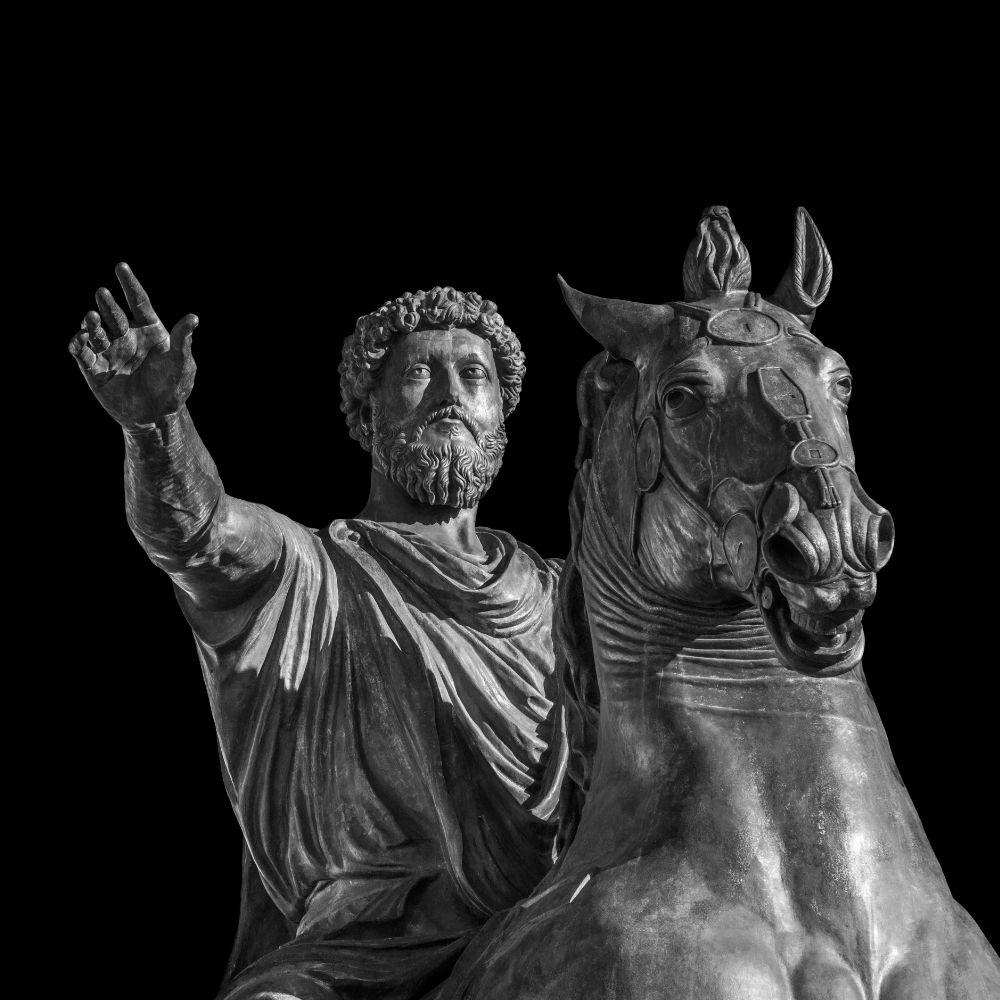
We walk these ruins every day, and that changes the way you understand them. Rome was not only a city of conquest and spectacle, it was also a city of branding, migration, engineering, political messaging, crowded apartment blocks. shifting identities, and surprising continuities that still shape the city now. Here are 10 Ancient Rome facts school books rarely explain, and where you can still see their traces in Rome today.
1. Rome was obsessed with public image, not just power
Most school books present Rome as a machine of military force, ambitious generals, and imperial control. That is true, but power in Rome also depended on performance. Public image mattered enormously, and monuments often functioned like political messaging carved in stone.
Roman leaders did not simply rule, they curated how they wanted to remembered. Emperors restored buildings, commissioned arches, sponsored games, and filled public spaces with inscriptions that told people what to think about victory, legitimacy, and order. In many cases, they also rewrote the past to make themselves look like the natural heirs of Roman greatness. The Arch of Constantine, for exemple, is famous not only because it survives, but because it reuses earlier imperial reliefs, visually connecting Constantine to admired rulers of the past and strengthening his political image. Roman public space was full of this kind of symbolic messaging.
3:00 hours
Small Group
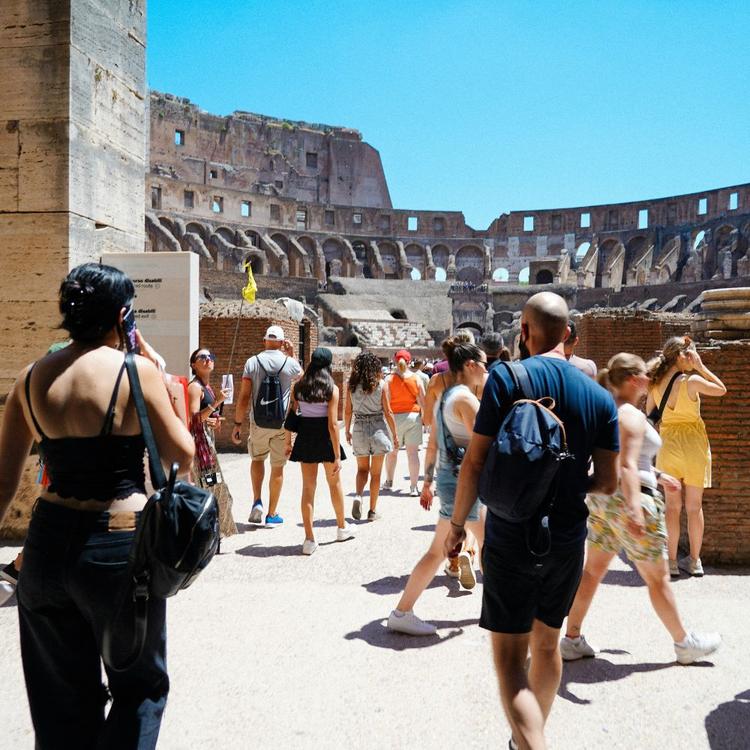
Colosseum & Ancient Rome Tour with Gladiator’s Gate | Small Group
Embark on a journey through the ages as we delve into ancient Rome: with a walk through the iconic colosseum and the ancient Roman Forum.
Starting from € 139,00
View more2. Ancient Rome was shockingly diverse
Many people still imagine Ancient Rome as culturally uniform, almost as if the city were populated by one clearly defined group of "Romans". In reality, imperial Rome was a giant urban crossroads. It drew people from across Europe, North Africa, and the Middle East, and that diversity was built into the empire itself.
Rome expanded not only through conquest, but through incorporation. Over time, the Roman system extended citizenship more broadly, absorbed local elites, and created channels, however unequal, through which people from many regions became part of Roman life. Ancient writers and modern historians alike point to Rome's unusual capacity to integrate outsiders, even if that process was always shaped by hierarchy, status and power.
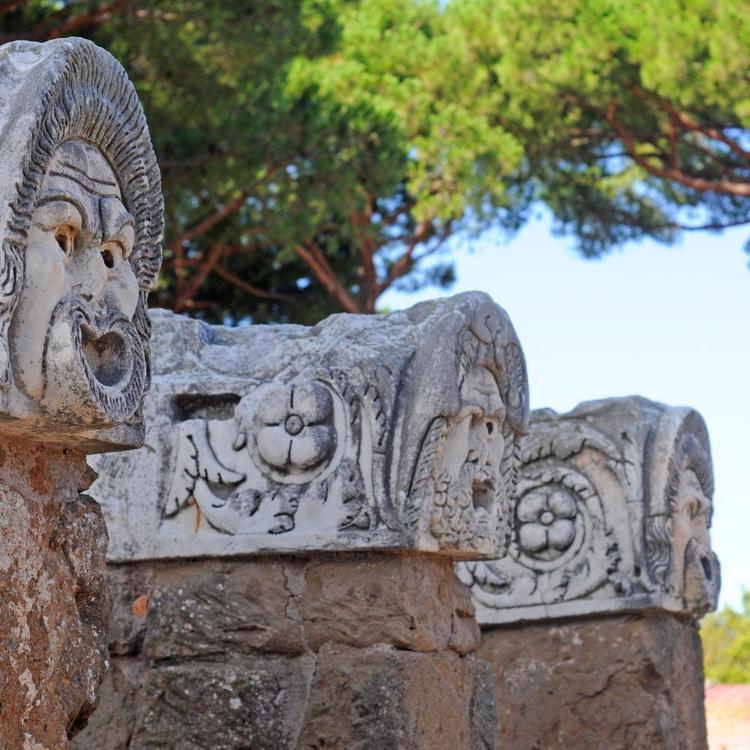
That is part of the answer to the question: what was ancient Rome famous for? Yes, conquest mattered. But Rome was also famous for building a world in which many peoples, languages, cults, and identities were pulled into one imperial system. The port city of Ostia Antica is one of the best palces to feel this. As Rome's comemrcial gateway, it connected the capital to the wider Mediterranean and gives modern visitors a clearer sense of just how international Roman life could be. The story becomes even more complex when you factor in slavery, manumission, and social mobility, which brought people of very different origins into the city under radically unequal conditions.
4:00 hours
Private
Ancient Ostia Tour | Private
Explore the ruins of Ostia Antica, the region's best preserved ancient city. Once Rome's main port city, Ostia was long lost, buried in the earth. Until now.
Starting from € 1130,00 for two
View more3. Was Ancient Rome LGBT friendly? The real answer is complicated
This is one of those questions that sounds modern, but opens a very real historical issue. The short answer is that Ancient Rome did document same sex relationships and same sex desire, but Roman attitudes were not organized around sexual identity in the modern sense.
Roman society generally judged sexual behavior less by orientation than by status, role, and social power. What mattered most was not whether a relationship was between two men or two women, but who held authority, who was considered socially dominant, and whether someone behaved in a way Romans thought fit their rank and gendered expectations. That does not make Rome "progressive" in a modern sense, and it does not make it simply intolerant either. It makes it different, structured by framework that modern readers can easily misread if they apply today's categories too quickly.
We know same sex relationships existed in Roman society, including among elite figures. The example of Hadrian and Antinous is one of the most famous, but literary and historical evidence points more broadly to a world in which same sex desire was visible, even as it was interpreted through the lens of hierarchy and masculinity than identity.
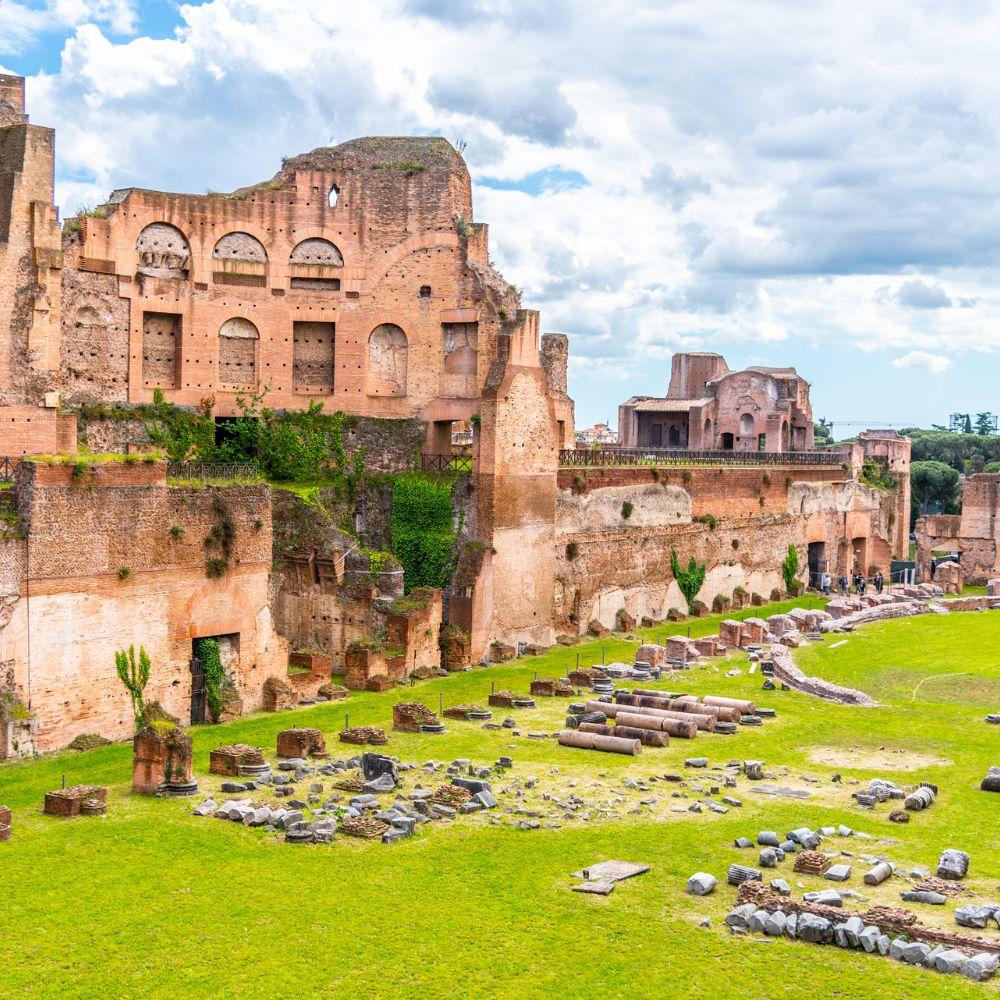
The Palatine Hill is a fitting place to think about this complexity. Imperial court life was full of gossip, scandal, performance, and intense scrutiny. Standing there, it becomes easier to understand that Roman intimacy was deeply political too.
4. Gladiator games were political theater
This is the part school books usually love, and fair enough, gladiators are unforgettable. But the arena was never just about violence. It was also about politics.
By the imperial period, spectacles had become and tool of mass popularity. Public entertainments, grain distributions, and large scale shows helped reduce unrest and reinforce the emperor's image as the provider of stability and pleasure. Gladiatorial games evolved from older funerary traditions into a political practice tied to display, favor, and control. In other words, the crowd mattered, and rulers knew it.
That does not mean every fight looked like Hollywood. Not all matches ended in death, not all gladiators were simply anonymous victims, and not all events worked the same way across Roman history. But the broaded points stands: the Colosseum was a monumental theater of public emotion, and a powerful political instrument. Once you see that, the building becomes more than an icon, it becomes a lesson in how spectacle can shape power.
5. Rome had modern infrastructure, and some of its logic still works
School books often emphasize Roman military genius and legal innovation. They spend less time on the fact that Rome was also an engineering civilization on a breathtaking scale. If you want to know what was ancient Rome famous for, infrastructure belongs very high on the list.
Roman roads wew carefully designed for durability, drainage, and connectivity, and the road network helped bind together a vast imperial territory. Roman aqueducts carried water across long distances by gravity alone, using channels, tunnels, distribution tanks, and, only in certain sections, the dramatic arches people usually picture. Their systems supplied baths, fountains, and neighborhoods with remarkabe efficency.
You can feel this achievement along the Appian Way, where the road still communicates the ambition of Roman planning, or at the Baths of Caracalla, where the scale of water management, heating, and public architecture still feels astonishing. The point is not that Rome looked exactly like a modern city, it did not. The point is that many of the problems Rome solved, movement, sanitation, suplly, urban maintenance, still feel surprisingly familiar.

3:00 hours
Private
Appian Way & Roman Aqueducts Tour | Private
Escape Rome’s center for a journey down the Appian Way, exploring the ancients’ most enduring architectural achievements - the aqueducts.
Starting from € 795,00 for two
View more6. Religion was a daily, practical business
Modern visitors often approach ancient religion as a set of beliefs, myths, and gods. The Romans approached it more like a system of obligations, rituals, and relationships that helped secure order in both private and public life.
Roman religion was highly practical. It involved household gods, civic ceremonies, priestly offices, and carefully repeated rituals whose precision mattered. Roman writers and historians descrive a culture deeply concerned with performing rites correctly, because maintaining the peace of the gods was tied to the stability of the state. Religion was therefore not separate from politics, it was one of the ways politics worked.
That is what makes the Pantheon so powerful for visitors today. Entering it, you are not simpli entering a beautiful ancient monument. You are stepping into a space that embodies continuity and transformation: a Roman temple world, later absorbed into Christian Rome, still functioning as a place of reverence and awe. It is one of the clearest reminders that Roman religion did not just vanish, it was reworked into later layers of the city.
7. Ancient Rome was loud, crowded, and chaotic
Textbooks often flatten Ancient Rome into marble ruins and neat timelines. The lived city was nothing like that. It was crowded, noisy, messy, and intensly urban.
Imperial Rome was one of the largest cities in the ancient world. People lived in insulae, multi story apartment buildings that remind us just how dense the city could be. Traffic, commerce, cooking fires, cramped housing, social inequality, and the constant movement of people made everyday life far more chaotic than the polished image many visitors first imagine. Even ancient writers complained about the stress, noise, and pressure of city living. The idea of Rome as a clean, silent museum city is a fantasy created after the fact.
This is one reason Trastevere can feel unexpectedly illuminating. No neighborhood can recreate ancient Rome exactly, of course, but in its narrow streets, layered rhythms, and street level energy, you catch something of Rome as a lived city rather than an abstract historical subject. The continuity is emotionl as much as architectural.
8. Women had more influence than school books suggest
Ancient Rome was a patriarchal society, and there is no point pretending otherwise. Women did not enjoy equal political rights, and elite male authors often shaped the stories that survive. Even so, school book versions of Rome often make women seem almost invisible, and that distorts the picture too.
Elite women could influence dynastic politics, family strategy, and public reputation. Women also appear in evidence connected to property, commerce, and economic activity, especially when we move beond the narrowest political narrative. Recent scholarship continues to highlight the ways Roman women participated in business within the limits imposed by law, class and social expectation.
Religion gave some women especially visible authority. The Vestal Virgins are the clearest example. They held an exceptional status in Roman public life and performed rites that mattered to the symbolic safety of the state itself. That did not make Rome egalitarian, but it does show that female influence in Roman society was more significant, and more public, than many school summaries imply.
The House of the Vestals is one of the best places in Rome to think about this balance of visibility and limitation at the same time.
9. Rome fell slowly, and never really disappeared
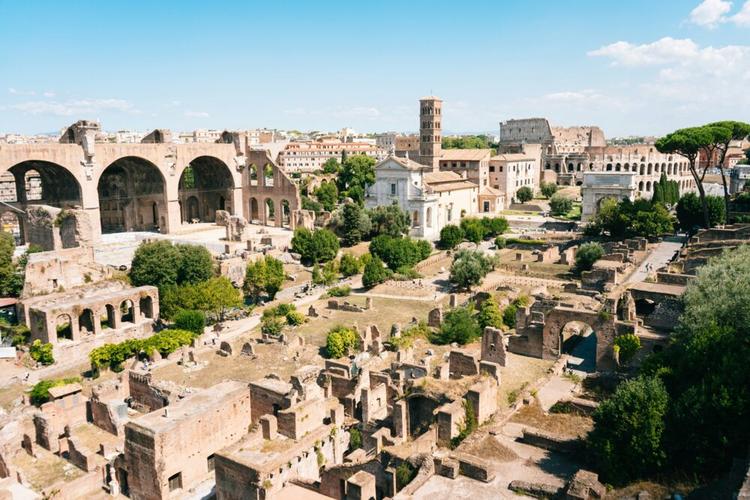
One of the most misleading textbook habits is treating the "Fall of Rome" like a single dramatic event with a neat ending. In reality, Rome changed over centuries, and much of it carried on in new forms.
Political authority in the western empire weakened gradually, institutions transformed, Christian structures expanded, and the idea of Rome continued to shape medieval and later Europe. Even after imperial forms shifted or collapsed, Roman law, urban memory, architecture, language, and religious authority did not simply evaporate. The story is less about sudden disappearance and more about long transformation.
That is why Capitoline Hill feels so important. It lets you see Rome not as a dead civilization sealed in the past, but as a city whose ancient, Christian, medieval, and modern identities overlap constantly. Rome fell, yes, but Rome also endured, adapted, and kept redefining itself.
10. Ancient Rome feels different when you stand inside it
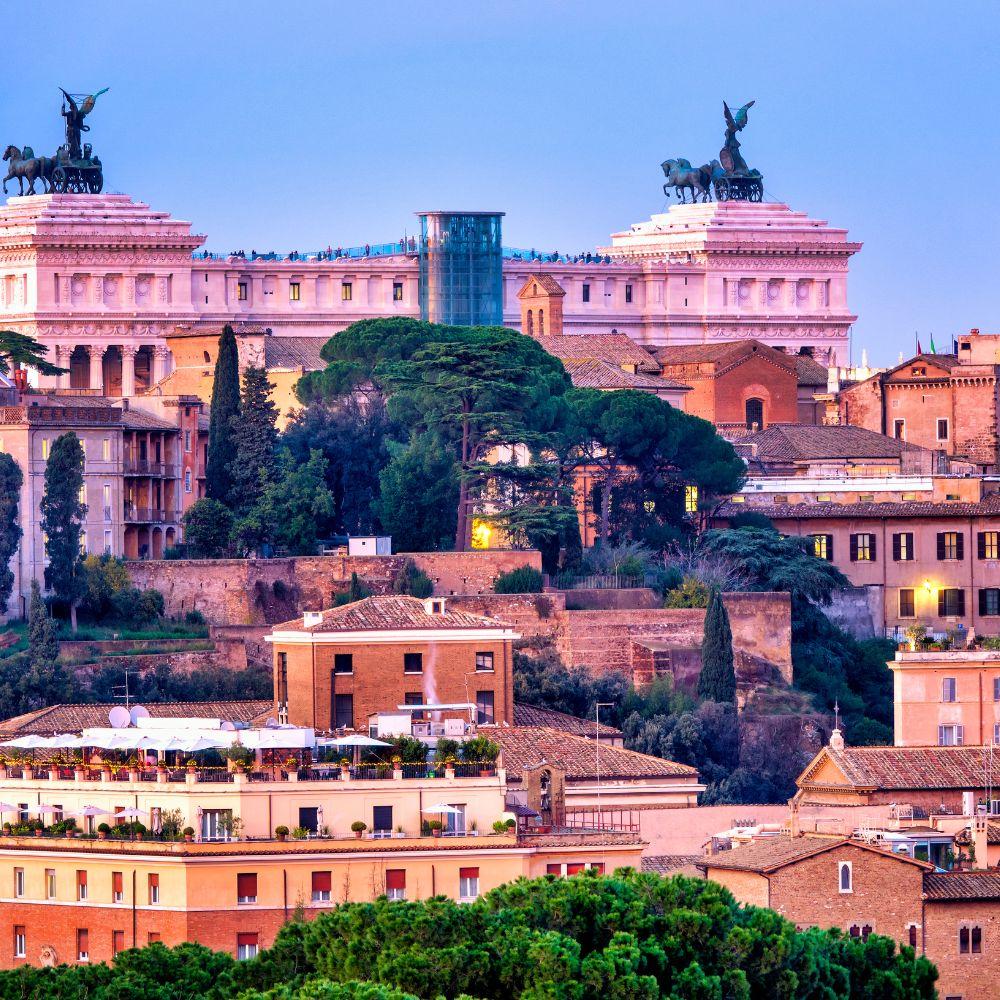
There is a limit to what any school book can do. A textbook can give you names, dates, events, and even good interpretation, but it cannot fully reproduce scale, texture, distance, atmosphere, or the strnge emotional effect of seeing Roman history rise around you in physical space.
That is the difference between reading about Ancient Rome and walking through it. Standing in the Forum, on the Palatine, inside the Pantheon, or along the Appian Way turns history from a flat subject into a three dimensional experience. You begin to notice how power was staged, how religion shaped movement, how infrastructure organized life, and how one civilization could be both distant and deeply familiar at once. The monuments stop being isolated attractions and start feeling like connected parts of a living historical landscape.
That is also why guided exploration matters. When someone helps you read the layers of the city, what was built, rebuilt, hidden, reused, glorified, or quietly transformed, Rome becomes far richer than the simplified version most of us first encountered in school.
Final thoughts
School books usually give us Ancient Rome in borad strokes: emperors, battles, gladiators, collapse. Those things matter, but they are only the surface. The deeper story is a city obsessed with image, built by many peoples, powered by infrastructure, shaped by ritual, full of contradiction, and never entirely gone.
And that is exactly why Rome still has such a hold on travelers today. The more closely you look, the more modern it feels, and the more surprising it becomes.
Back to top


