We have walked this space hundreds of times, early in the morning before the crowds arrive, and again in the afternoon when the light changes and the air feels heavier. Every single time, the Colosseum Underground leaves an impression. Not because it is hidden, but because it reveals something most visitors never get to see.
What Makes the Colosseum Underground Unforgettable
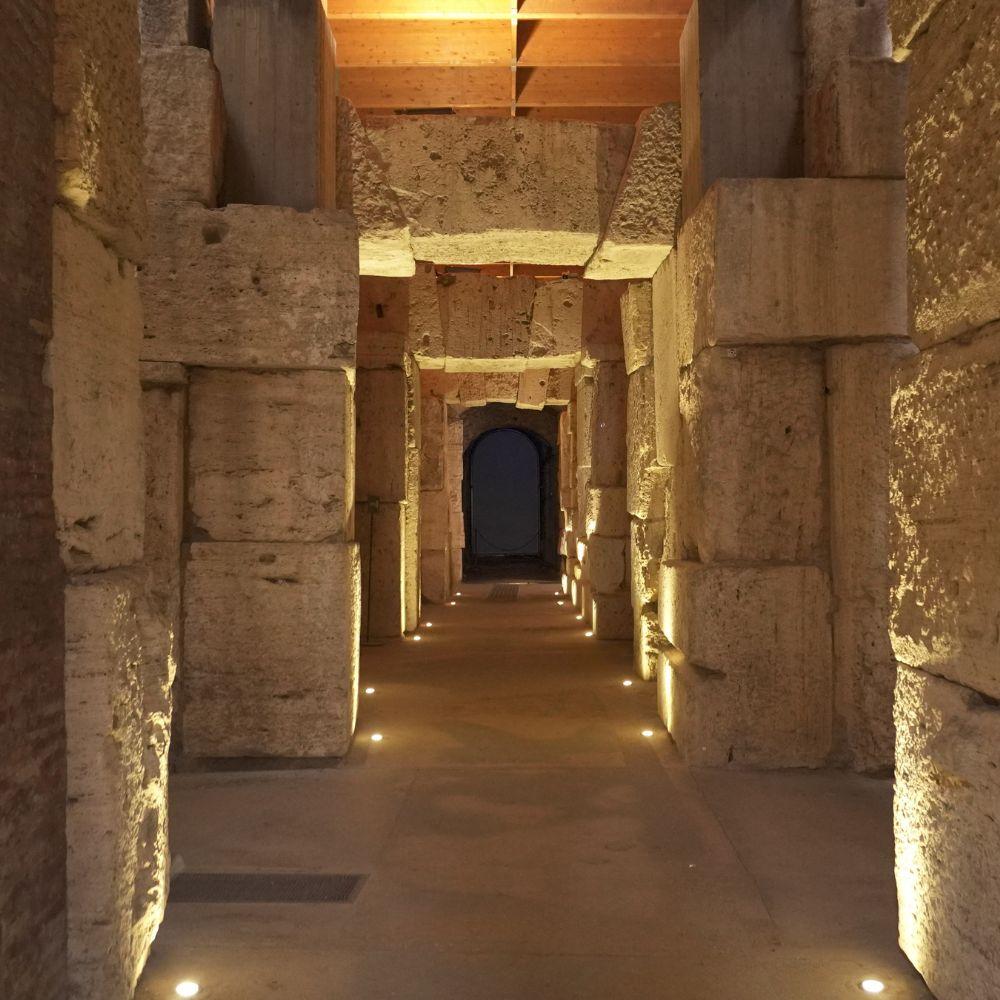
Standing in the arena is powerful, no doubt. But the moment you step below it, the Colosseum stops being a postcard and becomes something far more real. This article explains why the Underground changes everything, and how to experience it in a way that truly does it justice.
Why the Colosseum Underground Changes the Way You See the Colosseum
At first glance, the Colosseum looks like a monument built to impress. From the outside, it is massive, symmetrical, and iconic. From the stands, it feels grand and theatrical. Underground, it tells a very different story.
This hidden level reveals the Colosseum as a working machine. Every spectacle above depended on what happened below. The organization, the timing, the controlled chaos were all orchestrated in spaces visitors rarely imagine. Without seeing this layer, it is easy to misunderstand what the Colosseum really was.
The Underground exposes the logistics behind the brutality. It shows how animals were staged, how gladiators waited, how scenery appeared as if by magic. Most visitors leave with only half the story, because they never see where the games were truly made possible.

What the Colosseum Underground Actually Is
Before going deeper emotionally, it helps to understand what this space really was. The Colosseum Underground, also known as the hypogeum, was not an afterthought. It was the engine room of the arena.
A Hidden World Beneath the Arena
Beneath the wooden floor of the arena lay a dense network of corridors and chambers. This was where gladiators prepared in silence, where animals were kept in the dark, and where stage equipment waited to be activated. Movement here was constant and purposeful, guided by strict timing and coordination.
Nothing about this space was decorative. Every wall, passage, and doorway served a function. The hypogeum existed to keep the spectacle above seamless, controlled, and unpredictable. For a deeper historical explanation of how it worked, you can explore our dedicated article on the hypogeum.
Lifts, Trapdoors, and Ancient Stagecraft
What still surprises visitors today is the technology. The Romans engineered a system of wooden lifts powered by hand winches, capable of raising animals, fighters, and scenery straight into the arena floor. Trapdoors allowed for sudden appearances that shocked and thrilled the crowd.
This was ancient stagecraft at its most advanced. The technology was not just functional, it was designed to heighten drama. The Underground connected mechanics to emotion, turning engineering into spectacle long before modern theaters existed.
Why Standing Underground Feels So Different
This is where words struggle a little, because the feeling is visceral. Underground, the Colosseum feels closer, quieter, and more unsettling.
The travertine walls are preserved in their original tones, warm and worn by time. Light filters in unevenly, creating shadows that shift as you move. The corridors narrow, the noise from above disappears, and the scale becomes intimate rather than overwhelming.
Unlike the seating levels, where the eye is drawn outward, the Underground pulls you inward. You are no longer watching history from a distance. You are standing where people waited, listened, and anticipated what would happen next. Many visitors describe this space as more powerful than the arena itself, precisely because it feels human.
Why Access to the Colosseum Underground Is Limited
For centuries, the Underground was closed entirely. Only in recent years has it been carefully reopened, and even now access is tightly controlled.
This is not about artificial exclusivity. The Underground is fragile, and preservation is a priority. Strict limits protect the original structures, the flooring, and the walls that have survived for nearly two thousand years.
Because of these restrictions, tickets are limited and sell out well in advance. Visiting the Underground means entering a protected space that cannot handle mass tourism, which is exactly why the experience remains so impactful.
Is the Colosseum Underground Worth It for First Time Visitors?
This is one of the most common questions we hear, especially from travelers planning their first trip to Rome. The short answer is yes, for most people, it absolutely is.
First time visitors often regret skipping the Underground because it provides context that the arena alone cannot. It does not replace the experience of standing on the arena floor or walking the seating levels. It completes it.
Travelers who enjoy understanding how things worked, not just how they looked, benefit the most. Seeing the Underground transforms the Colosseum from an impressive ruin into a living system, and that understanding stays with you long after you leave.

Experiencing the Colosseum Underground with Walks Inside Rome
This is where the difference between seeing and understanding becomes clear. Access alone is not enough. The Underground needs interpretation.
With Walks Inside Rome, the experience is shaped by expert, licensed English speaking guides who know this space intimately. Guides who have walked these corridors countless times, and know how to bring them to life through storytelling.
Private access to both the Underground and Arena Levels allows the visit to flow naturally, without rushing. A carefully paced itinerary gives you time to absorb the atmosphere, ask questions, and connect the spaces above and below. The four hour experience also includes the Roman Forum and panoramic viewpoints, adding context without shifting focus away from the Underground itself.
You can explore the full experience here:
4:00 hours
Private
VIP Colosseum Underground & Ancient Rome Tour | Private
Embark on a private tour of ancient Rome’s most enduring monuments with VIP access to the Colosseum, its underground and the Roman Forum with your expert guide.
Price on request
View morePractical Tips for Visiting the Colosseum Underground
Planning makes a real difference here. Booking well in advance is essential, especially during peak travel seasons. Early or midday start times often provide the best balance of light and crowd levels.
Comfortable shoes are important, and the Underground is wheelchair accessible, though some areas require careful navigation. More than anywhere else in the Colosseum, guided access matters here. Without explanation, much of what you see remains silent. With the right guide, every corridor has a story.
Seeing Rome from Below
Rome is a city layered with history, and the Colosseum Underground is one of the clearest expressions of that idea. Going below the surface changes how you understand what is above it.
This experience stays with visitors because it goes beyond sightseeing. It replaces images with insight, and ruins with meaning.
For those curious to see Rome beyond postcards, exploring the Underground with the expert guides at Walks Inside Rome offers a way to connect the spaces, the stories, and the silence beneath the arena in a way that feels personal and lasting.
And once you have seen the Colosseum from below, you never quite look at it the same way again.
Back to top


