Most travelers arrive in Rome expecting the city of emperors, gladiators, aqueducts and ancient ruins. And of course, Ancient Rome is still everywhere, rising from the Forum, the Colosseum and the stones under your feet.
How Renaissance Rome Reshaped the city
Published on

But the Rome visitors actually move through today, with its grand churches, ordered piazzas, monumental perspectives and powerful visual routes, owes much of its shape to a later transformation. Reinassance Rome did not simply add beauty to the city. It changed the way Rome was seen, crossed, understood and remembered.
To explore Renaissance Rome is to learn how to read the city. Once you notice the logic behind a street, the symmetry of a square, the position of a church façade or the theatrical arrival at a landmark, Rome becomes more than a collection of famous sites. It becomes a carefully reshaped cultural landscape, designed to guide both the eye and the immagination.
The Renaissance Turning Point in Rome's Transformation
Rome did not become a Renaissance capital by accident. Its transformation was tied to power, faith and the urgent need to restore the city's role at the center of the Christian world.
After the return of the papacy to Rome, the city had to be rebuilt not only physically, but symbolically. The popes needed Rome to express authority again, as a spiritual capital, a political stage and a destination worthy of pilgrims, diplomats and artists.
This was the turning point that reshaped Renaissance Rome. The city became a project of image building, led by successive popes and carried out through architecture, art and urban planning. Churches were restored or rebuilt, streets were reorganized, palaces appeared across the historic center and ancient symbols were reinterpreted through a new visual language: Rome had to look like the capital it claimed to be.
Renaissance popes understood that buildings could communicate power. A basilica coul express continuity with early Christianity. A piazza could stage civic authority. A straightened street could make movement feel purposeful. A carefully framed view could turn a walk through the city into a act of recognition.
This collective vision explains why Renaissance Rome still feels so coherent, even when its monuments belong to different decades and different hands. The transformation was gradual, but the message was consistent: Rome was being restored as a universal city.
Urban Planning and the Redesign of Renaissance Rome
The Renaissance changed Rome at street level. It affected how people moved, where they gathered and how they approached the city's most meaningful places.
Rather than thinking of Renaissance urban planning in Rome as a single master plan, it is better to imagine a sereis of strategic interventions. Street, piazzas, churches and palaces were reorganized to create stronger connections between religious, civic and symbolic spaces.
One of the most important aims was to improve movement between major pilgrimage sites. Rome was a city of sacred destinations, and pilgrims needed routes that made sense. The Renaissance approach gave new importance to connections between basilicas, chruches and ceremonial spaces, transforming movement through the city into a more legible experience.
Streets began to do more than carry people from one point to another. They guided attention. They created anticipation. They opened toward façades, domes, obelisks, hills or squares. A street could become a visual corridor, a way of preparing the visitor for arrival.
Piazzas also gained new importance. In Medieval Rome, many urban spaces had grown organically, shaped by trade, defense, local communities and older ruins. Renaissance planning brought a different sensitivity, one based on proportion, order and perspective.
A Renaissance piazza was not only an open space. It was a stage. Buildings framed it, façades disciplined it, staircases directed movement through it and central axes gave it meaning. The viewer was invited to stand look and understand.
This is one of the clearest wasy to Renaissance Rome reshaped the city. It trained people to experience Rome visually. Streets, squares and monuments began to work together, guiding the glaze and turning the city into a structured sequence of views.
5:00 hours
Private
Holy Rome: The Four Major Papal Basilicas | Private
Discover Rome's major Christian basilicas on this private guided tour as we trace the major role Christianity has played in shaping Western culture.
Starting from € 1307,00 for two
View moreKey Renaissance Landmarks that Define the City Today
The most famous Renaissance landmarks in Rome are often visited as individual attractions. Yet they are easier to understand when seen as parts of a wider cultural and urban system.
St. Peter's Basilica, the Sistine Chapel and Piazza del Campidoglio each reveal a different side of Renaissance Rome. Together, they show how architecture, religious storytelling, civic identity and urban design helped reshape the city's image.
St. Peter's Basilica: Renaissance ambition on a monumental scale
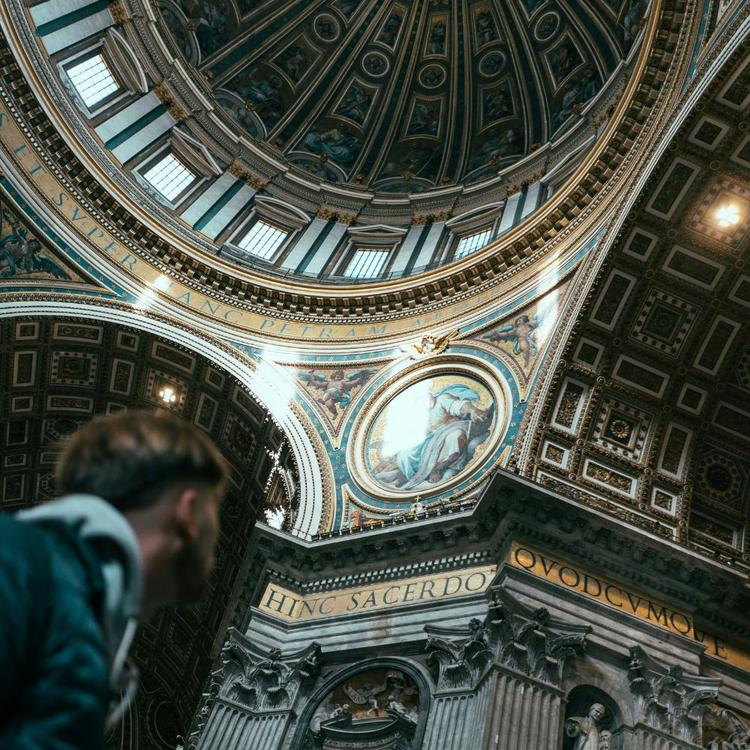
St. Peter's Basilica is one of the clearest expressions of Renaissance Rome's ambition. It was conceived as a religious monument, but also as a statement about authority, continuity and universal power.
For visitors, St. Peter's is often overwhelming because of its scale. But its deeper meaning lies in the way it connects theology, architecture and political vision. The basilica stands at the heart of Catholic Rome, yet it also reflects the Renaissance belief that space could be ordered, measured and elevated into something almost cosmic.
Its dome, associated with Michelangelo's vision, became one of the defining forms of the Roman skyline. Seen from different parts of the city, it does more than mark a location. It creates orientation. It reminds visitors that Renaissance Rome was increasingly shaped around visual symbols capable of dominating the urban immagination.
In this sense, St. Peter's Basilica is not simply one of the great chucrches of the world. It is one of the landmarks that taught Rome how to project itself.
The Sistine Chapel: Religious storytelling as a visual experience
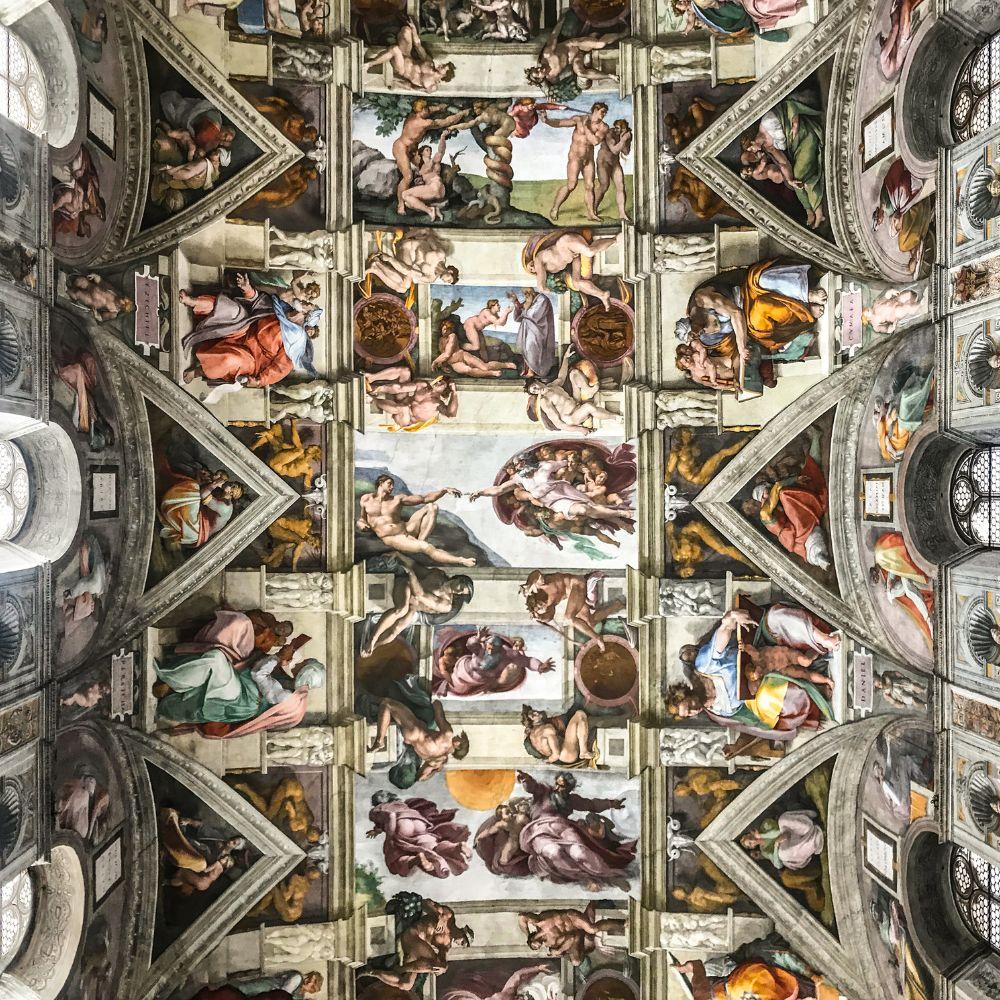
The Sistine Chapel is often approached as a masterpiece to be admired, especially for Michelangelo's ceiling. But within the story of Renaissance Rome, it also represents a profund transformation in religious communication.
The Sistine Chapel turned sacred narrative into an immersive visual experience. Its frescoes did not simply illustrate biblical episodes. They surrounded the viewer with theology, human drama, prophecy and salvation history, all organized through the power of Renaissance art.
For travelers, this matters because the Sistine Chapel reveals how Renaissance Rome wanted to be experienced. Faith was not presented only through words or ritual. It was made visible, emotional and spatial.
The chapel also helps explain why Rome became such a magnet for artists and patrons. In Renaissance Rome, art was a language of persuasion, belief and authority.
3:00 hours
Private
The Vatican Jewels: Sistine Chapel & St. Peter's Basilica Tour | Private
Discover two of the Vatican’s greatest masterpieces on a First Entrance early morning tour of the Sistine Chapel and St. Peter’s Basilica. Enter before the crowds to admire world-famous art in a quieter, more intimate setting and enjoy an unforgettable Vatican experience.
Starting from € 514,00 for two
View morePiazza del Campidoglio: Michelangelo and the art of civic space
Piazza del Campidoglio offers a different kind of Renaissance lesson. It is not a church interior or a papal basilica, but a civic space where architecture, symbolism and urban design come together with extraordinary clarity.
Designed by Michelangelo, the square reorganized the Capitoline Hill, one of Rome's most ancient and politically charged places. Rather than facing the Roman Forum, the piazza turns toward the city of the popes, signaling a new relationship between Ancient Rome, civic power and Renaissance identity.
What makes Piazza del Campidoglio so important is its control of experience. The approach, the staircase, the alignment of the palaces, the central statue and the geometry of the pavement all work together. Nothing feels accidental.
For visitors, it is one of the best places to understand Renaissance urban thinking in Rome. The square does not ask you only to look at architecture. It places you inside a designed perspective.
Beyond the Icons: Everyday Renaissance Rome
Renaissance Rome is not limited to the Vatican, St. Peter's Basilica or Michelangelo's most famous works. Some of its most rewarding traces are quieter, hidden in the everyday fabric of the historic center.
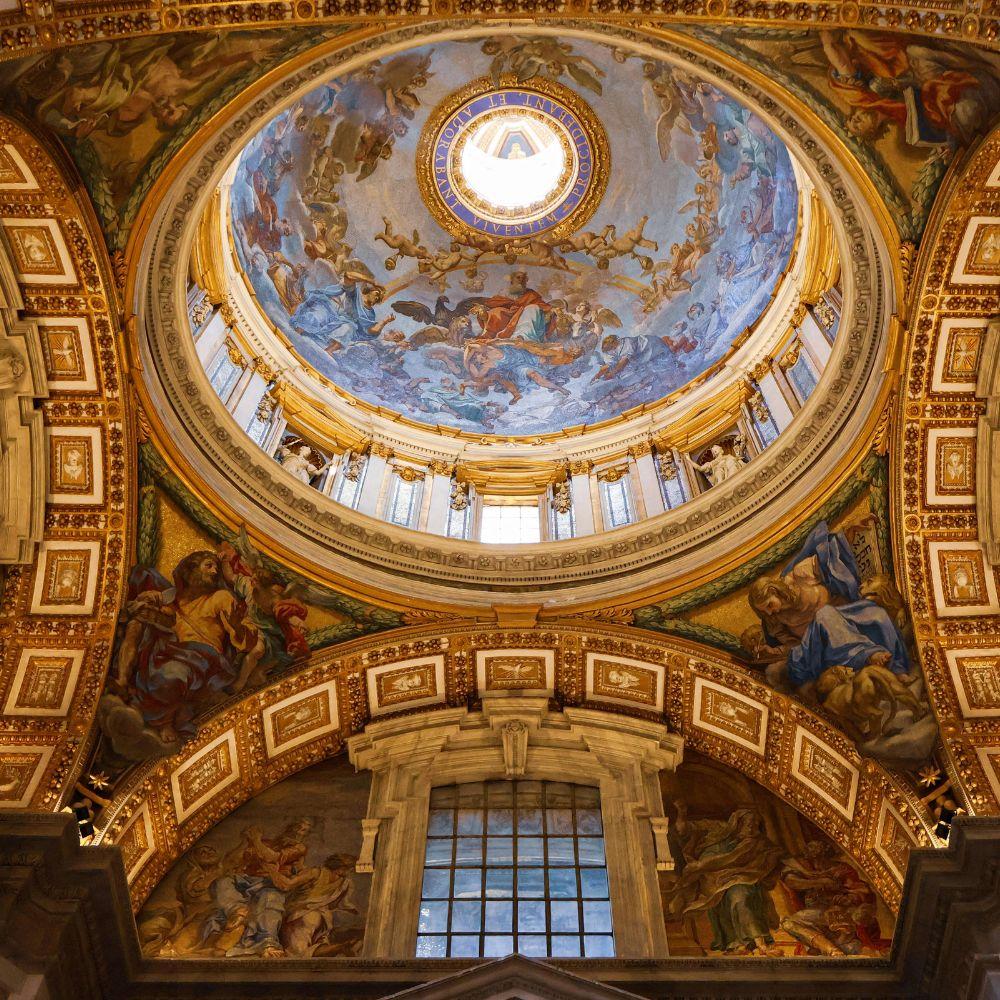
Once you know what to look for, the Renaissance appears in smaller churches, private chapels, palace façades, courtyards, staircases, windows and doorways. These details often go unnoticed by visitors moving quickly between major attractions.
A secondary church may reveal a carefully proportioned chapel. A palace façade may show the disciplined rhythm of Renaissance architecture, with windows arranged in balanced rows and stonework used to express status. A courtyard glimpsed through an open doorway may suddenly reveal arches, columns and symmetry.
This is where Renaissance Rome becomes especially interesting for curious travelers.
Look for proportion. Renaissance architects were fascinated by harmony, often inspired by classical models. Spaces were designed to feel balanced, even when they were inserted into the irregular streets of an older city.
Look for symmetry. Doorways, windows, courtyards and chapels often use repeated forms to create order.
Look for spatial control. Renaissance architecture frequently tells the eye where to go, what to notice and how to move through a space.
These principles help vsitors recognize the Renaissance layer of Rome even outside the major landmarks. A quiet chapel can suddenly feel connected to St. Peter's. A small piazza can reveal the same urban instinct that shaped larger civic spaces.
How to Experience Renaissance Rome During your Visit
Renaissance Rome is best understood through connections. Seeing one site in isolation can be impressive, but seeing how severeal places speak to one another changes the entire experience.
Instead of treating the city as a checklist, approach it as a sequence of related spaces. Notice how a street prepares you for a church façade. Notic how a piazza frames movement. Notice how a dome becomes visible from a distance, than disappears, than returns.
This kind of visit does not require rushing. In fact, Renaissance Rome rewards slower attention. A traveler who pauses in a square, or follow the direction of a street often discovers more than someone trying to cover as many monuments as possible.
This approach transforms sightseeing into understanding. It gives structure to the experience.
Why a Guided Experience Enhances Understanding
Many Renaissance elements in Rome are visible, but not always self explanatory. A square or a chapel may be beautiful at first glance, yet its deeper meaning often depends on historical and urban context.
This is where a guided experience makes the difference. Walks Inside Rome helps visitors read the city with a more informed eye, connecting architecture, papal ambition, artistic choices, and urban design into one coherent story.
Instead of seeing separate landmarks, a guide reveals how they belong to the same Renaissance vision. Observation becomes comprehension, and Rome becomes easier to understand as a living cultural landscape.
Renaissance Rome as a Way of Reading City
Once you begin to notice its logic, Rome changes. Monuments stop feeling separate. Streets become meaningful. Piazza become stages.
This is the gift of understanding Renaissance Rome during your visit. It allows you to move through the city with a sharper eye and a richer sense of place. You begin to see Rome not only as an ancient capital filled with ruins, but as a city repeatedly reimagined by those who wanted it to speak the world.
And in many ways, it still does.

Written by
Marilena Barberi
Marilena Barberi is the Co-Founder and CEO of Walks Inside Rome & Italy, a family-run tour company founded in 1999. Born and raised in Rome, she has spent more than 25 years helping travelers discover the Eternal City through authentic, engaging, and carefully curated experiences. Her deep knowledge of Rome, it history, culture, neighborhoods, and traditions shapes the philosophy behind Walks Inside Rome & Italy: offering visitors a more personal way to experience the city, guided by local expertise and a genuine passion for Italian hospitality.
Back to top


