On Good Friday evening, Rome slows to a hush. The sun fades behind the ancient skyline, candles begin to glow in the gathering darkness, and the Colosseum rises illuminated against the night. Thousands of people gather quietly along the ancient roads as the Pope addresses the crowd and the solemn procession of the Via Crucis at the Colosseum begins. The atmosphere is both spiritual and deeply historical, a moment where faith, memory, and the stones of ancient Rome seem to speak together.
How to Attend Via Crucis in Rome

In this guide, we help you understand what the Via Crucis is, where and when it takes place, and how you can attend respectfully and comfortably as a visitor. We will also show you how to prepare for the experience, both pratically and culturally, and how to include it within a broader Easter trip to Rome.
What is the Via Crucis
Every year during Holy Week, Rome hosts one of the most moving religious traditions in the Catholic world, the Via Crucis, also known as the Way of the Cross. The ceremony commemorates the path Jesus Christ walked on the day of his crucifixion, a journey marked by moments of suffering, compassion, and sacrifice.
The devotion is divided into fourteen station, each representing a key moment during Christ's final journey to Calvary. During the Roman Via Crucis, these stations are reflected upon through readings, prayers, and meditations delivered to the gathered crowd.
What makes the Roman celebration particularly powerful is its setting. The ceremony unfolds beside the Colosseum, one of the most iconic monuments of the ancient world. For many believers, the location evokes the memory of early Christian martyrs, creating a poerful link between the origins of Christianity and the living traditions of the modern Church.
If you are planning to visit during Easter, understanding the role of the Via Crucis is an important part of experiencing the atmosphere of the season. You can also explore the wider context of Holy week traditions in our guide to Easter Week in Rome.
What are the Stations of the Cross?
The Station of the Cross form the structure of the Via Crucis. Each station represents a moment in the story of Christ's Passion, from his condemnation to his crucifixion and burial.
Traditionally, there are fourteen stations. During the Good Friday ceremony in Rome, each station is marked by a reflection read aloud, often accomoained by prayers of brief meditations that invite the crowd to contemplate the meaning of the moment.
Rather than simply recounting a historical narrative, the stations are meant to guide participants through a spiritual journey. Each one reflects themes such as suffering, forgiveness, compassion, and preserverance. When experienced in the setting of Rome, with thousands of candles illuminating the night around the Colosseum, the ritual becomes both symbolic and deeply emotional.
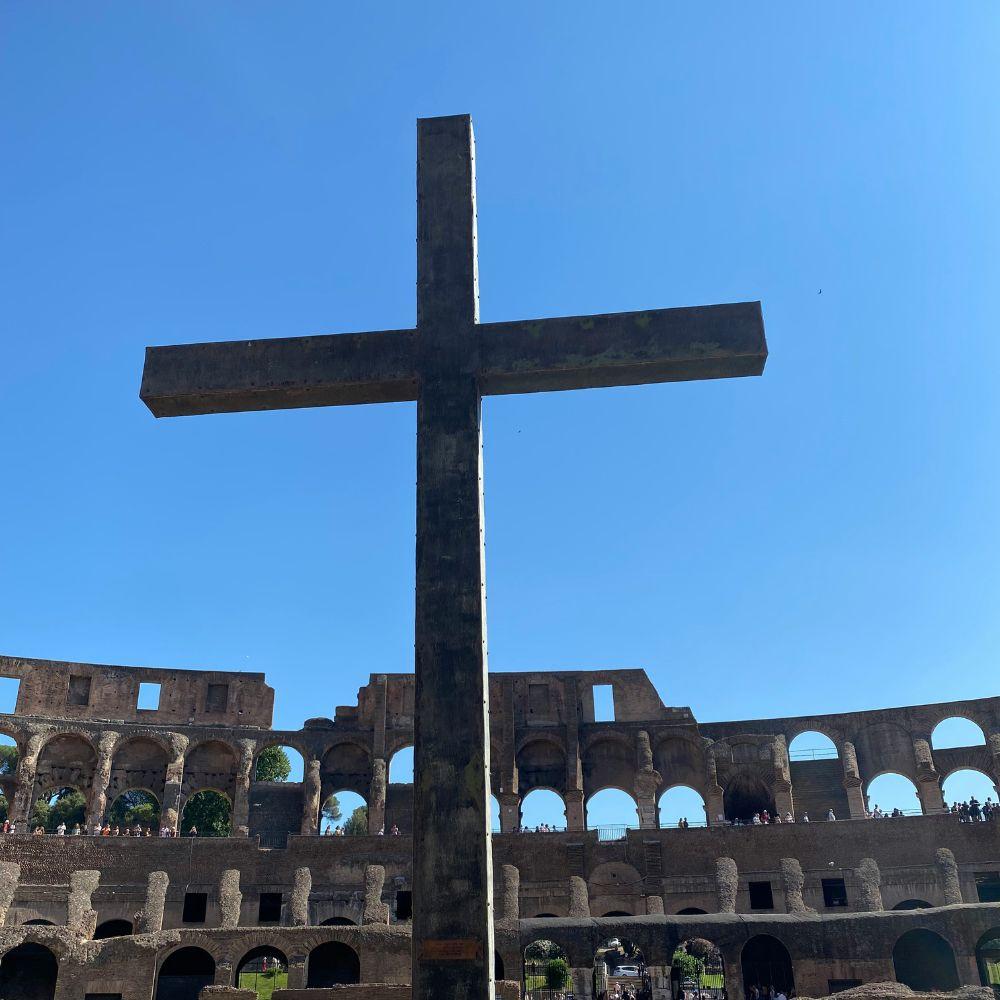
Where is the Via Crucis held in Rome?
The Via Crucis in Rome takes place at the Colosseum, one of the most recognizable landmarks in the world and one of the most meaningful settings for this ceremony.
The procession begins near the Colosseum and extends along the ancient route toward the Roman Forum and Palatine Hill, creating a dramatic backdrop that blends the remains of Imperial Rome with one of Christianity's most solemn traditions.
This event occurs every Good Friday during Holy Week, making it one of the central Easter in Rome events. In most years, the Pope presides over the ceremony, leading prayers and reflections as the stations are read.
The Via Crucis is a free public event, open to both pilgrims and visitors. However, the area around the Colosseum is carefully organized for security, with controlled access points and designated perimeters.
For travelers visiting Rome during Holy week, this ceremony is one of the most significant cultural and religious moments of the entire season.
When does the Via Crucis take place?
The Via Crucis always take place on Good Friday, the day that commemorates the crucifixion of Christ within the Christian calendar.
The exact date changes every year because it follows the timing of Easter. The ceremony usually begins in the evening, typically around 9:15 PM, when darkness enhances the candlelit atmosphere surrounding the Colosseum.
Visitors planning to attend should check the official Vatican announcements closer to their travel dates, as start times can occasionally vary. Arriving well in advance is highly recommended, especially during busy Holy Week periods.
How to attend the Via Crucis in Rome
Attending the Via Crucis is relatively straightforward, but good planning makes the experience much smoother. Because the event attracts thousands of people each year, understanding the logistics ahead of time can make a significant difference.
Tickets
One of the most common questions travelers ask is whether tickets are required.
The Via Crucis is completely free and open to the public, and no tickets are needed. Anyone can attend. However, because the ceremony draws large crowds, arriving one to two hours early is strongly recommended if you want a good viewing position.
Best viewing areas
The area directly surrounding the Colosseum offers the most direct view of the ceremony, but it is also the most crowded.
Many visitors choose to sand along Via dei Fori Imperiali, the wide avenue connecting the Colosseum with Piazza Venezia. From here, you can still see the illuminated monument and follow the ceremony through the large screens and speakers placed throughout the area.
Slightly elevated points along the surrounding perimeter can also provide a clearer view of the gathering crowd and the candlelit atmosphere.
Security
Security during the Via Crucis is carefully managed.
Expect airport style security checks at entry points leading toward the Colosseum area. Police presence is significant, and road closures are common in the surrounding neighborhoods.
Large bags may be restricted, so it is best to travel light when attending the ceremony.
What to Bring
Preparing properly can make the evening far more comfortable.
Recommended items include:
- Water
- Comfortable walking shoes
- A light jacket, since April evenings in Rome can become cool
- Patience, as crowds can be large and movement slow
Accessibility Considerations
The Via Crucis involves large standing crowds and limited seating. Visitors should expect to remain standing for extended periods of time.
Those with mobility concerns may prefer to watch from slightly farther away along the wider streets where movement is easier.
Is the Via Crucis Worth Attending if you are Not Catholic?
Many visitors wonder whether the ceremony is meaningful if they are not Catholic or religious.
In reality, the Via Crucis in Rome is both a spiritual event and a cultural experience. Even for secular travelers, the setting alone is extraordinary. The Colosseum, illuminated against the night sky, surrounded by thousands of silent candles, creates one of the most visually powerful scenes in the city.
Beyond the religious meaning, the event connects layers of history that define Rome itself. Ancient Imperial architecture, early Christian history, and modern Vatican traditions all meet in a single moment.
For many travelers, witnessing the Via Crucis becomes one of the most memorable experiences of their entire visit to Rome.
How to plan your Rome trip around the Via Crucis
Traveling to Rome during Easter requires thoughtful planning. Holy Week is one of the busiest periods of the year, and visitors arrive from around the world to participate in the celebrations.
Hotels tend to book early, especially in neighborhoods close to Vatican City and the historic center. Public transportation can also become crowded due to large number of visitors attending religious events.
When planning your itinerary, it helps to consider other important locations connected to Easter traditions. Many travelers also visit St. Peter's Basilica during this time, where several major liturgies take place throughout the week.
Visitors interested in exploring Rome's history should also keep in mind that some attractions, including the Colosseum, may adjust their schedules during Holy Week.
Planning ahead allows you to balance the spiritual events of the season with visits to the city's historic landmarks.
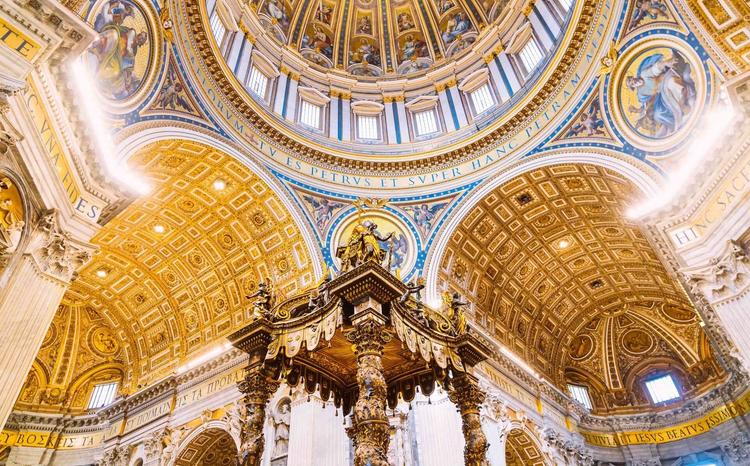
3:00 hours
Private
Early Morning Vatican Tour & Sistine Chapel | Private
Enjoy a private early morning Vatican tour with priority tickets and an expert guide, and discover its unparalleled horde of treasures before general opening
Starting from € 514,00 for two
View moreExperience Holy Week in Rome with Deeper Context
Attending the Via Crucis is an unforgettable moment, but understanding the deeper layers of history behind what you are witnessing makes the experience far richer.
The Colosseum itself tells a story that spans centuries, from the spectacles of Imperial Rome to its later symbolic connection with Christian martyrs. Nearby lie the ruins of the Roman Forum, once the political heart of the empire, and the Palatine Hill where emperors built their places.
Holy Week in Rome also connects closely with traditions of Vatican City, where centuries of liturgy and ceremony continue today.
Exploring these places with knowledgeable local guides can transform what you see. Understanding how ancient Rome evolved into the spiritual center of Catholicsm reveals connections that are not immediately visible to the casual visitor.
Through private Colosseum tours, early access Vatican Experiences, and carefully designed cultural itineraries, it becomes possibile to see the city with the historical depth it deserves.
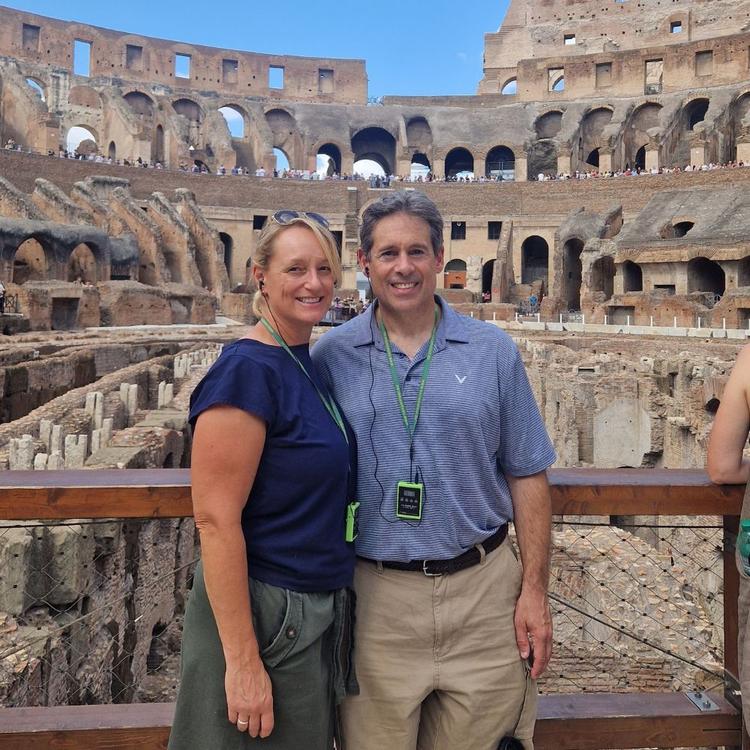
3:00 hours
Private
Colosseum & Ancient Rome | Private
Discover the secrets of the Colosseum, the amphitheater that could hold up to 60,000 people, before entering the Roman Forum - the beating heart of ancient Rome.
Starting from € 467,00 for two
View moreConclusion
As the Via Crucis draws to a close, candles flicker against the ancient stones of the Colosseum and the quiet crowd slowly begins to disperse into the Roman night. In that moment, the city feels suspended between past and present, faith and history woven together in a single space.
Attending the Via Crucis is not simply watching an event. It is witnessing Rome layered in memory, empire, and devotion.
For travelers who wish to explore these traditions with deeper understanding, discovering Holy Week in Rome alongside expert local guides offers a richer perspective on the stories unfolding around you.
FAQ
Is Via Crucis free in Rome?
Yes, the Via Crucis at the Colosseum is completely free to attend. It is a public religious ceremony organized during Good Friday, and anyone can participate or observe without purchasing a ticket.
Do you need tickets for the Via Crucis?
No tickets are required. However, because the event attracts large crowds, visitors should arrive early to secure a good viewing spot near the Colosseum or along Via dei Fori Imperiali.
How long does the Via Crucis last?
The ceremony typically lasts between one hour and one hour and a half. The duration may vary slightly depending on the reflections and readings delivered during the stations.
What time does the Via Crucis start?
The Via Crucis usually begins around 9:15 PM on Good Friday evening. Travelers should check the official Vatican announcements before their visit, as the exact start time can occasionally change.
Can tourists attend the Via Crucis in Rome?
Yes, tourists are welcome to attend. The event is open to everyone, including visitors who simply wish to witness the ceremony and experience the unique atmosphere of Good Friday in Rome.
Where does the Pope stand during Via Crucis?
In most years, the Pope presides over the ceremony from a position near the Colosseum, where he leads the prayers and reflections for the fourteen stations. Large screens and audio systems allow the crowd to follow the event throughout the surrounding area.
Back to top


